3D Baby Wall Decor Laser Cut: Footprint Design Evaluation
In the realm of personalized home decor, few concepts resonate as deeply as capturing a child's growth. The 3D Baby Wall Decor Laser Cut. Footprint represents a specific niche within this market, offering a digital blueprint for creating tangible keepsakes. Unlike mass-produced items found in retail stores, this asset is designed for individuals who possess or have access to laser cutting technology. It serves as a bridge between digital design and physical craftsmanship, allowing parents, artisans, and small business owners to produce high-quality, layered wall art that celebrates a milestone moment.
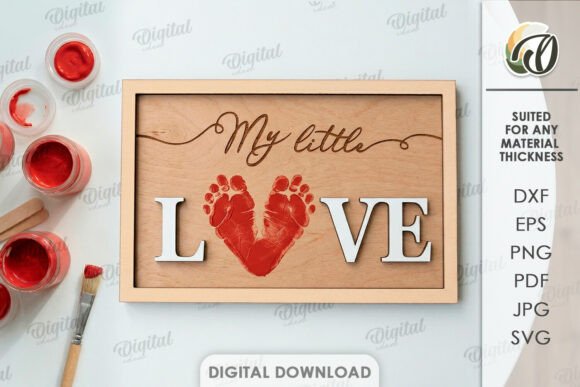
It is crucial to approach this product with a clear understanding of its nature. This is strictly a digital product. No physical goods will be sent upon purchase. The imagery associated with the listing serves solely as inspiration to demonstrate potential outcomes. The actual deliverable is a compressed zip folder containing a single design file available in SVG, DXF, EPS, PDF, JPEG, and PNG formats. For professionals and hobbyists alike, this distinction defines the workflow: the value lies not in receiving an object, but in acquiring the technical specifications required to manufacture one.
Understanding the Digital Asset Structure
The utility of the 3D Baby Wall Decor Laser Cut. Footprint hinges on the versatility of its file formats. In professional laser cutting workflows, compatibility is paramount. The inclusion of SVG (Scalable Vector Graphics) and DXF (Drawing Exchange Format) files ensures that the design can be imported into industry-standard software such as LightBurn, Adobe Illustrator, CorelDRAW, or Silhouette Studio without loss of resolution. These vector formats are essential because they define the geometry of the cut lines mathematically, allowing the machine to trace the footprint with precision regardless of the scale.
For those less familiar with vector editing, the EPS and PDF files offer additional layers of flexibility. EPS remains a standard for print and production environments, while PDF provides a universal viewing option that retains vector data. Furthermore, the inclusion of raster formats like JPEG and PNG is practical for previewing the design, sharing mockups with clients, or using the image for non-cutting applications, such as sublimation printing on other media. This comprehensive package suggests a creator who understands the varied needs of their audience, ranging from casual hobbyists to serious entrepreneurs running a custom gift shop.
Design Characteristics and Aesthetic Value
The core concept of a 3D footprint design relies on layering. When executed correctly, the laser-cut pieces stack to create depth, transforming a flat outline into a dimensional sculpture. The 3D Baby Wall Decor Laser Cut. Footprint typically utilizes multiple concentric outlines of the same shape, offset slightly to create a shadow effect or a stepped appearance. This technique adds visual interest and texture to nursery walls, making the piece stand out against flat paint or wallpaper.
From a design perspective, the simplicity of a footprint is its greatest strength. It is universally recognized and emotionally charged. However, the execution must be precise. If the spacing between layers is too tight, the wood or acrylic may crack during removal; if too wide, the 3D effect diminishes. A well-constructed digital file accounts for these variables, ensuring that the kerf—the width of material removed by the laser—is considered in the final dimensions. This attention to detail separates a usable template from a frustrating one.
The aesthetic appeal also depends heavily on the material chosen for the project. While the design itself is neutral, its final look changes dramatically based on whether it is cut from birch plywood, MDF, basswood, or acrylic. Birch plywood offers a natural, warm grain that complements most nursery themes, while painted MDF allows for bold color customization. The 3D Baby Wall Decor Laser Cut. Footprint acts as a neutral canvas, adaptable to various interior design styles, from rustic farmhouse to modern minimalist.
Practical Application and Workflow Integration
Integrating this digital asset into a real-world workflow requires specific equipment and skills. To utilize the 3D Baby Wall Decor Laser Cut. Footprint, the user must have access to a CO2 laser cutter or a fiber laser capable of engraving and cutting sheet materials. The process begins with importing the vector file into the machine's control software. Here, the operator sets power, speed, and frequency parameters based on the material thickness and type.
One of the primary advantages of this digital format is scalability. Parents often want a large statement piece for a main wall, while others might prefer a smaller version for a gallery frame. Because the file is vector-based, the footprint can be resized infinitely without pixelation. This flexibility makes it an excellent tool for small business owners who need to fulfill custom orders of varying sizes without redesigning the product from scratch.
However, the "endless possibilities" mentioned in the product description come with a caveat: the responsibility for assembly lies with the buyer. Once the pieces are cut, they must be cleaned of residue, sanded if necessary, and glued together to achieve the 3D effect. This post-processing step is labor-intensive but offers a level of customization that pre-made items cannot match. Users should factor in this time commitment when evaluating the total cost and effort of the project.
Target Audience and Use Cases
Who benefits most from the 3D Baby Wall Decor Laser Cut. Footprint? The primary demographic includes DIY enthusiasts and crafters who enjoy hands-on projects. For these individuals, the satisfaction comes from the entire process, from unboxing the digital files to mounting the finished art on the wall. It appeals to those who value unique, handmade gifts over generic store-bought alternatives.
A second significant group comprises small business owners and Etsy sellers specializing in personalized baby gifts. For entrepreneurs, this asset reduces overhead costs. Instead of purchasing expensive inventory, they buy a one-time license to the design file and only incur material costs per order. This model allows for a leaner operation and higher profit margins. The ability to offer rapid customization—such as adding a name or birth date alongside the footprint—adds significant value to their service offerings.
Professionals in the event planning or nursery design sectors may also find this resource useful. They can use the design to create bespoke installations for client homes, ensuring that every room feels tailored and personal. The digital nature of the product means it can be stored indefinitely and accessed whenever a new project arises, providing long-term value beyond a single transaction.
Limitations and Considerations
While the 3D Baby Wall Decor Laser Cut. Footprint offers significant creative freedom, it is not without limitations. The most obvious barrier is the requirement for specialized equipment. Individuals without a laser cutter cannot utilize the file directly. They would need to outsource the cutting to a local makerspace or a third-party laser cutting service, which introduces additional costs and communication hurdles.
Furthermore, the quality of the final product is entirely dependent on the user's skill level and the quality of their materials. A poorly set laser can result in burnt edges or incomplete cuts, ruining the aesthetic of the delicate footprint layers. Similarly, using low-quality wood that warps easily can compromise the structural integrity of the 3D assembly. Buyers must assess their own technical capabilities before purchasing.
Another consideration is the scope of the design. The package contains only one design variation. While the file formats allow for resizing and recoloring, users seeking a library of different footprint styles or complementary elements (like stars, clouds, or names) may need to seek additional assets. It is a focused solution rather than a comprehensive suite.
Final Assessment
The 3D Baby Wall Decor Laser Cut. Footprint is a practical, high-value digital resource for those equipped to leverage it. It transforms a sentimental concept into a manufacturable product through robust file formats and thoughtful design considerations. For professionals and serious hobbyists, it eliminates the guesswork of drafting complex vector paths, allowing them to focus on material selection, finishing, and assembly.
Its true worth is realized not in the download itself, but in the physical objects created from it. Whether used for a cherished family heirloom or a profitable side business, the design provides a reliable foundation for original wall decor. By understanding the requirements—specifically the need for laser cutting hardware and assembly skills—buyers can maximize the potential of this asset. It stands as a testament to how digital tools empower creators to bring personalized, high-quality designs into the real world.