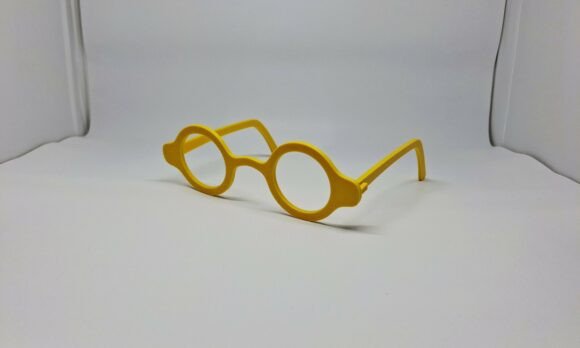
Round Glasses STL 3D Printable Model: A Practical Guide for Creators
The rise of desktop manufacturing has transformed how hobbyists and professionals approach costume design, fashion accessories, and prop creation. Among the most popular digital assets in this space is the Round Glasses STL 3D Printable Model. This specific file format offers a distinct aesthetic characterized by smooth lines and simple geometry, making it a versatile choice for FDM (Fused Deposition Modeling) printers. Unlike mass-produced plastic eyewear found in retail stores, these digital files provide complete control over scale, material, and customization, allowing users to tailor the final product to their specific needs.
For adults aged 20 to 50 exploring creative projects, understanding the nuances of this model is essential before committing print time and filament. While the concept of printing glasses frames sounds straightforward, the execution involves considerations regarding structural integrity, fit, and intended use cases. This guide evaluates the practical application of round glasses STL models, comparing them to alternative fabrication methods and outlining when they represent the best solution for your project.
Defining the Round Glasses STL Format and Its Distinctive Features
An STL (Stereolithography) file is a standard mesh format used to define the surface geometry of a three-dimensional object without color or texture information. When applied to eyewear, a Round Glasses STL 3D Printable Model typically features a circular or slightly oval lens aperture with integrated temples (arms) designed to rest on the ears. The primary distinction of these models lies in their geometric simplicity. Complex curves and thin walls can be challenging for entry-level printers, but the round frame design often utilizes thicker cross-sections that bridge gaps easily during the printing process.
The design philosophy behind these models prioritizes ease of printing. Smooth lines reduce the likelihood of layer shifting or stringing, common issues in FDM printing. Furthermore, the lightweight nature of the resulting object makes it ideal for temporary wear, such as at costume parties or photo shoots, where long-term durability is less critical than visual impact. For those new to 3D printing, the beginner-friendly structure of these files lowers the barrier to entry, offering a high success rate even with basic calibration.
Comparing 3D Printed Frames to Traditional Manufacturing
When evaluating options for custom eyewear, it is necessary to compare 3D printed solutions against traditional injection-molded or acetate frames. Mass-produced glasses are engineered for optical precision, comfort over extended periods, and safety standards that protect the eyes from impact. In contrast, a Round Glasses STL 3D Printable Model serves a different purpose. It is primarily an aesthetic accessory rather than functional eyewear.
Cost and Customization: Traditional frames require significant upfront investment for molds and materials. If you need a specific size that falls outside standard sizing charts, 3D printing offers a distinct advantage. You can scale the STL file up or down to fit different face shapes without incurring additional tooling costs. However, this flexibility comes with trade-offs. While you can adjust the width of the temples, the hinge mechanism is often non-functional or requires post-processing assembly, whereas commercial frames come with durable, lubricated hinges.
Material Properties: Commercial frames utilize specialized acetates or nylon blends that are flexible, hypoallergenic, and resistant to UV degradation. 3D printed frames are typically made from PLA (Polylactic Acid) or PETG (Polyethylene Terephthalate Glycol). PLA is rigid and brittle, making it unsuitable for daily wear if dropped. PETG offers better impact resistance and heat tolerance but may lack the glossy finish of polished acetate. Understanding these material limitations is crucial; a printed frame is excellent for a one-night event but generally not recommended for replacing prescription glasses.
Alternatives to STL Models: CAD Design vs. Pre-Made Files
Another decision factor is whether to download a pre-made Round Glasses STL 3D Printable Model or design your own using Computer-Aided Design (CAD) software. Pre-made files save significant time and technical expertise. They are optimized for printing, meaning support structures are minimized, and wall thicknesses are already calibrated for strength. For users who want a quick result for a cosplay event or a photo booth prop, downloading a ready-to-print file is the most efficient route.
Conversely, designing from scratch allows for total personalization, such as adding logos, altering the rim thickness, or integrating mounting points for LED lights. However, this approach requires proficiency in modeling software and a deep understanding of printer kinematics. For most casual creators, the time investment required to design a functional pair of glasses outweighs the benefits unless the design needs to be unique to a specific brand or character.
Evaluating Use Cases: When to Choose 3D Printing
The suitability of a Round Glasses STL 3D Printable Model depends heavily on the intended application. These models excel in scenarios where aesthetics and novelty take precedence over long-term utility.
- Cosplay and Costumes: Characters like Harry Potter or iconic figures from steampunk genres often feature round spectacles. 3D printing allows cosplayers to replicate these looks accurately without spending hundreds of dollars on props that will only be worn once or twice. The ability to paint the frames after printing adds another layer of realism.
- Photo Booth Props: For events, weddings, or corporate gatherings, lightweight props are essential. Printed frames are safe to handle, inexpensive to produce in bulk, and can be customized with event branding. Their light weight ensures they do not cause discomfort during short bursts of use.
- Fashion Accessories: Some individuals use 3D printed frames as "over-glasses" to be worn atop prescription lenses for a stylistic effect. Because they are not bearing the weight of heavy glass lenses, the structural demands are lower, making the printed frame a viable fashion statement.
- Educational Projects: In STEM workshops, these models serve as excellent examples of parametric design and rapid prototyping. Students can learn about scaling, infill density, and layer orientation by attempting to print and refine these objects.
Technical Considerations and Limitations
While the versatility of these models is appealing, there are inherent limitations that must be acknowledged. The most significant constraint is the fit. Human faces vary widely in inter-pupillary distance (IPD) and ear placement. An STL file is static; while it can be scaled uniformly, it cannot automatically adapt to the unique curvature of an individual's head. Users may find that the temples dig into the skin or that the nose bridge does not sit comfortably. Post-printing adjustments, such as sanding or bending the arms, are often necessary to achieve a tolerable fit.
Furthermore, the choice of filament impacts the final outcome. PLA is the most accessible material and prints easily, but it softens at relatively low temperatures (around 60°C). This means leaving printed glasses in a hot car could deform them permanently. PETG is a more robust alternative, offering greater flexibility and heat resistance, though it can be trickier to print due to warping tendencies. ABS is generally discouraged for beginners due to fume requirements and warping issues, despite its durability.
Safety is another critical factor. Since these are decorative items, they should not be marketed or used as protective eyewear. The layers in FDM printing can create micro-fractures under stress, and the sharp edges that sometimes occur on the inner rims can irritate the skin around the eyes. Proper post-processing, including smoothing with acetone vapor (for ABS) or fine-grit sandpaper, is essential to ensure the object is safe to wear near sensitive areas.
Decision Factors: Is This the Right Resource for You?
Determining whether a Round Glasses STL 3D Printable Model is the right choice requires a clear assessment of your goals. If you are looking for a durable, all-day wearable item that provides vision correction, traditional optometry services remain the superior option. The precision required for optical alignment and the safety standards for lens retention are difficult to achieve with consumer-grade 3D printers.
However, if your objective is to create a unique, cost-effective prop for a performance, a thematic party, or a creative photography session, this digital resource is highly effective. The ability to iterate quickly—printing a test version, adjusting the scale, and reprinting—offers a level of agility that traditional manufacturing cannot match. Additionally, the environmental aspect of producing only what you need, rather than buying disposable plastic props, aligns well with sustainable practices.
In conclusion, the Round Glasses STL 3D Printable Model represents a powerful tool for the modern maker. It bridges the gap between digital creativity and physical expression, offering a stylish and functional solution for specific, non-critical applications. By understanding its strengths in customization and cost-efficiency, alongside its limitations in fit and material durability, users can make informed decisions that maximize the potential of their 3D printing capabilities. Whether for a Halloween costume, a business card holder, or a quirky fashion statement, these models provide a tangible way to express creativity with minimal friction.